

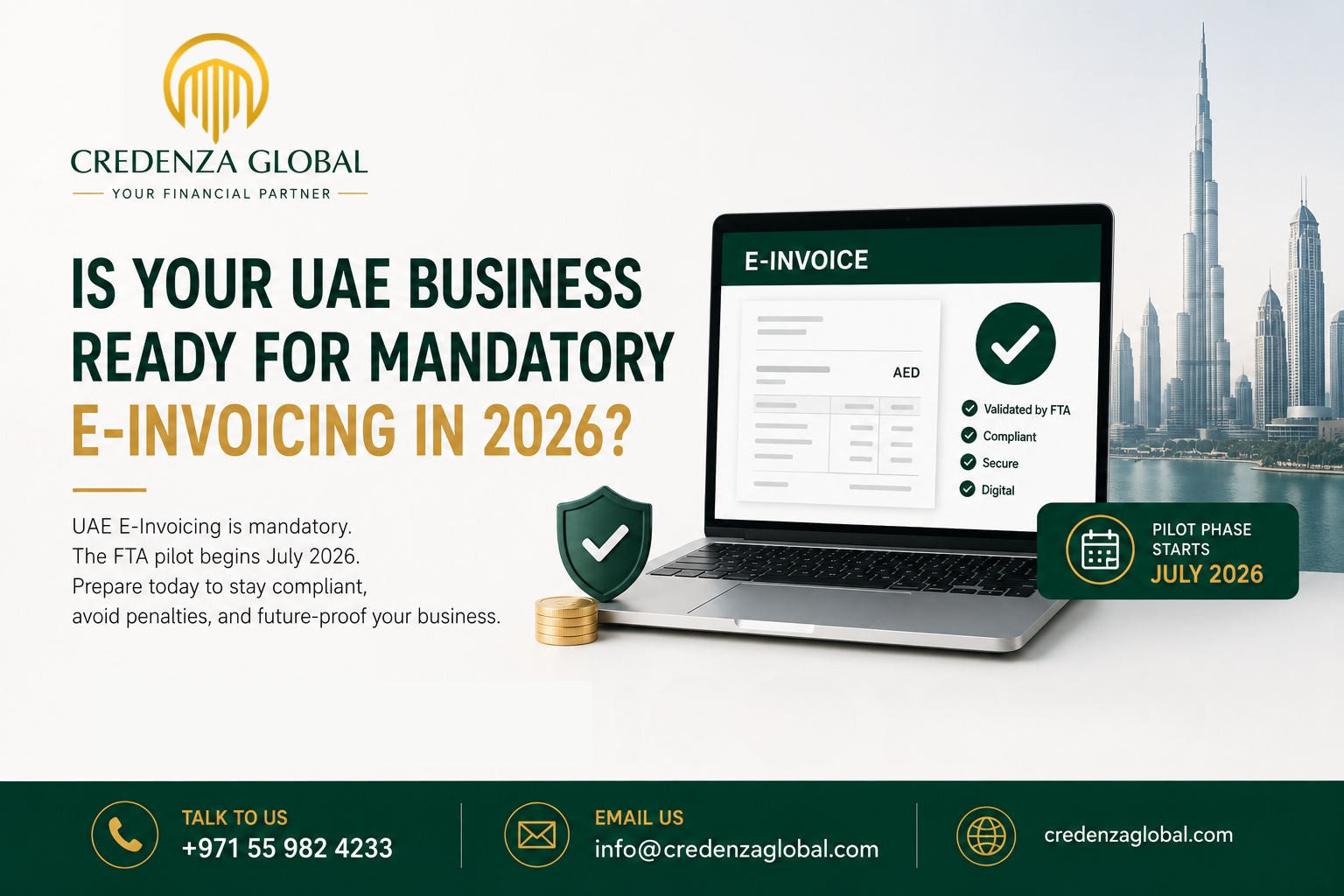
The UAE is undergoing one of the most significant tax reforms since VAT was introduced in 2018, and most businesses are not prepared for it.
Mandatory UAE E-Invoicing is no longer a future regulation. The Federal Tax Authority (FTA) has confirmed a pilot phase starting July 2026, with a broader rollout expected through 2027. For businesses still relying on PDF invoices, Excel sheets, or basic accounting software, the time to act is right now. This is not a software upgrade. It is a complete transformation of how invoices are created, transmitted, validated, and reported in the UAE, and the businesses that delay will face serious operational and financial consequences when the mandate goes live.
What Is UAE E-Invoicing, and Why Is It Different From What You Do Now?
Many business owners assume that because they already email invoices digitally, they are ahead of the curve. They are not.
UAE E-Invoicing under the FTA’s Continuous Transaction Control (CTC) framework requires:
- Structured XML or UBL format
- Transmission through a UAE Accredited Service Provider (ASP)
- Real-time FTA validation
- Compliance with the UAE Peppol framework
- Secure digital audit trail
A PDF emailed to a client is not an e-invoice. It is an image of an invoice with no structured data, no validation, and no pathway to ASP transmission. Once the mandate is enforced, PDF invoices will not be accepted as compliant.
Why Most UAE Businesses Are Unprepared for E-Invoicing
Despite growing awareness, the gap between knowing about UAE E-Invoicing and actually preparing for it remains wide. These are the most common problems we see:
- Still Using Manual or Excel-Based Invoicing: A significant portion of UAE SMEs generate invoices manually or through Excel templates. These systems cannot produce structured XML output and cannot connect to any Accredited Service Provider. Businesses in this position face a complete rebuild of their invoicing process
- Treating PDFs as Digital Compliance: Emailing a PDF is not digital invoicing under UAE law. It never was. But many business owners treat it as sufficient. The new mandate removes this misconception entirely: only structured, machine-readable e-invoices transmitted through an approved ASP will comply.
- Accounting Software Without API Integration: Even businesses using established accounting platforms QuickBooks, Zoho, Sage may not be ready if their current version cannot connect to a UAE ASP via API. Compatibility must be confirmed, and integration must be built and tested before the deadline.
- Poor Master Data Quality: E-Invoicing depends entirely on accurate underlying data. Missing or incorrect TRN numbers, inconsistent customer records, and outdated VAT registration details will cause invoices to fail FTA validation the moment they are submitted. Data quality is not optional it is foundational.
- No Compliance Plan or Internal Ownership: The most common gap of all: no one inside the business has been assigned responsibility for UAE E-Invoicing compliance, no systems review is underway, and no implementation timeline exists. Without a plan, no preparation happens, and the deadline does not move.
5 Signs Your Business Is Not Ready for UAE E-Invoicing
Be honest with yourself on these:
- You issue invoices using Excel, Word, or a basic PDF template
- Your accounting or ERP software has no API or ASP integration capability
- Your finance team has received no training on UAE E-Invoicing requirements
- Your customer and supplier records contain gaps, errors, or unverified TRN numbers
- You have not yet conducted any E-Invoicing readiness assessment or gap analysis
What Happens If You Don’t Prepare for UAE E-Invoicing in Time?
The risks of delaying are not abstract. They are operational, financial, and immediate:
- You cannot issue invoices at all; If your systems are not integrated with a UAE ASP by the deadline, compliant invoice issuance becomes impossible.
- Invoices get rejected in real time; Failed FTA validation means the invoice never reaches your client, directly impacting cash flow and payment timelines.
- VAT returns become unreliable; E-Invoice data feeds directly into VAT reporting. An invoicing error is a VAT filing error, with all the associated FTA penalties.
- Financial penalties apply; Once enforcement begins, non-compliance carries significant financial consequences. Rushed, last-minute implementation is far more expensive than planned preparation.
- Client and supplier relationships suffer; Businesses unable to issue or receive compliant invoices create friction for every counterpart in their supply chain.
What UAE Businesses Should Do Right Now
Businesses that start today have enough time to transition smoothly. Here is the practical roadmap:
- Conduct an E-Invoicing Readiness Assessment: Map your current invoicing process against UAE E-Invoicing and Peppol requirements. Identify every gap; systems, data, process, and people
- Evaluate Your Accounting or ERP System: Determine whether your current software can generate structured XML/UBL invoices and connect to a UAE-approved ASP.
- Select a UAE Accredited Service Provider (ASP): Every compliant invoice must flow through a government-approved ASP. Research compatible providers, confirm FTA approval, and begin integration well before the pilot launch.
- Clean and Validate Your Master Data: Audit every customer and supplier record. Verify TRN numbers, legal entity names, addresses, and VAT registration details.
- Train Your Finance and Accounting Team: Your staff must understand how UAE E-Invoicing works in practice: what structured XML means, how the ASP transmission works, and what happens when an invoice is rejected. Training is a compliance requirement, not an optional extra.
- Build, Document, and Test Your Compliance Workflow: Document the new end-to-end invoicing process. Test it in the FTA’s sandbox environment. Identify failure points before they occur in a live transaction.
The Real Benefit of Preparing Early
Businesses that approach UAE E-Invoicing as a transformation rather than a compliance burden will gain real advantages:
- Faster invoice processing and shorter payment cycles
- Cleaner, more accurate VAT reporting with fewer FTA queries
- Real time financial visibility through validated transaction data
- Reduced invoice disputes and billing errors
- A complete, audit-ready digital record of every transaction
- Greater credibility with clients and suppliers already operating in the new system
Early movers do not just avoid penalties. They build stronger, more efficient financial operations. Is your business ready for UAE E-Invoicing? Contact Credenza Global today for a free readiness consultation. We help UAE startups, SMEs, and growing businesses stay compliant, accurate, and ahead of every regulatory change.