

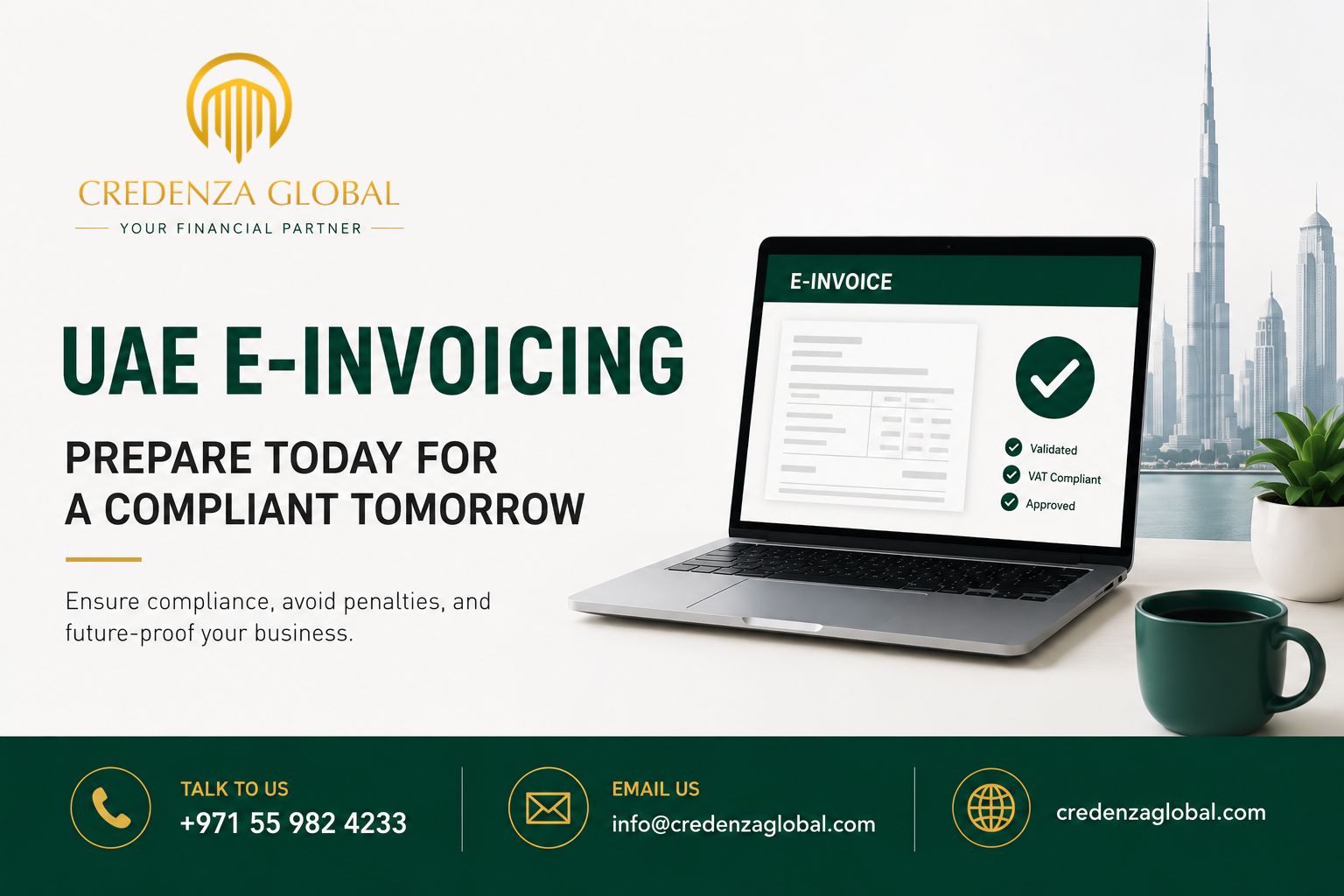
The UAE is undergoing one of the most significant digital financial transformations in its history. With UAE E-Invoicing regulations on the horizon, businesses across Dubai, Abu Dhabi, and the wider Emirates must act now or risk serious compliance failures, operational disruptions, and financial penalties. Many business owners believe E-Invoicing in the UAE simply means sending invoices as PDFs over email. This is a dangerous misconception. True E-Invoicing involves structured electronic data exchange, real-time VAT validation, and full system integration with approved platforms.
In this guide, we break down the 7 biggest mistakes businesses must avoid and what you should be doing right now to prepare.
What Is UAE E-Invoicing?
It is a government-mandated digital invoicing system where invoices are generated, transmitted, and stored in a structured, machine-readable electronic format not simply as a scanned document or PDF attachment. The UAE Ministry of Finance is implementing E-Invoicing as part of its national digital transformation agenda.
The goals are clear:
• Improve VAT compliance and reduce tax fraud
• Increase financial transparency across all sectors
• Streamline business to business (B2B) and business to government (B2G) transactions
• Align the UAE with global e-invoicing standards
For UAE businesses, this means upgrading your accounting systems, training your staff, and ensuring your invoicing processes are fully compliant, well before deadlines arrive.
7 Mistakes Businesses Must Avoid
Mistake 1: Waiting Until the Last Minute to Prepare
One of the most common and costly mistakes businesses make is assuming E-Invoicing compliance is a future problem. The reality is that UAE E-Invoicing implementation is not a simple software switch. It is a major operational project that could require months of preparation.
A complete UAE E-Invoicing transition may involve:
• ERP system modifications and upgrades
• Accounting software integration
• Invoice format restructuring to meet regulatory standards
• Staff training across finance, sales, and operations teams
• Vendor and supplier coordination
• Internal process restructuring and testing
What to do: Start your assessment immediately. Identify gaps in your current invoicing process and build a transition timeline.
Mistake 2: Confusing PDF Invoices with Compliant E-Invoices
Sending an invoice by email in PDF or Excel format is not E-Invoicing. This is one of the most widespread misunderstandings among UAE businesses and a mistake that could leave your company non-compliant when E-Invoicing becomes mandatory.
Compliant UAE E-Invoicing requires:
• Structured, machine-readable invoice data (typically XML or JSON format)
• Automated system-to-system exchange through approved channels
• Standardized data fields aligned with UAE Federal Tax Authority (FTA) requirements
• Real time or near real-time validation and processing
What to do: Understand the technical specifications of E-Invoicing standards and assess whether your current invoicing process meets them.
Mistake 3: Relying on Outdated Accounting Software
Legacy accounting systems were not built for the demands of UAE digital invoicing compliance. If your business is still running on older software, you could be facing significant compatibility challenges and expensive emergency upgrades as E-Invoicing deadlines approach.
Outdated systems often cannot support:
• Automated invoice validation workflows
• XML or structured electronic invoice formats
• API integrations with UAE E-Invoicing platforms
• Real-time VAT reporting and compliance monitoring
• UAE FTA-compliant E-Invoice generation
Accounting platforms most likely to be UAE E-Invoicing ready include Odoo, Zoho Books, SAP, Oracle, Microsoft Dynamics, and TallyPrime. However, readiness depends on your current version and configuration.
What to do: Conduct a formal E-Invoicing software compatibility review. Consult an accounting professional to evaluate whether your ERP or accounting system needs an upgrade or reconfiguration.
Mistake 4: Overlooking Data Accuracy and Master Data Quality
E-Invoicing systems are built on data precision. When structured invoice data is submitted electronically, errors that were previously overlooked will now trigger rejections, compliance flags, and potential FTA scrutiny.
Common data problems that will cause failures:
• Incorrect or missing Tax Registration Numbers (TRN)
• VAT calculation errors on line items or totals
• Duplicate invoice numbers
• Incomplete or inaccurate customer and supplier information
• Invalid or inconsistent invoice numbering sequences
What to do: Conduct a full master data audit, reviewing all customer, supplier, and product records.
Mistake 5: Failing to Train Employees on E-Invoicing Processes
Technology alone cannot guarantee UAE E-Invoicing compliance. Even the most advanced accounting system will fail if your team does not know how to use it correctly. Employee errors remain one of the top causes of invoicing non-compliance worldwide.
Finance, accounts, sales, and management teams all need training on:
• Invoice validation and error correction procedures
• Compliance requirements and FTA reporting obligations
• System usage and data entry standards
• How to handle rejected or disputed E-Invoices
What to do: Schedule structured training sessions for all relevant teams. Include practical walkthroughs of your new E-Invoicing system and document internal procedures for ongoing reference.
Mistake 6: Neglecting Internal Financial Controls
E-Invoicing dramatically increases financial transparency. Every invoice issued will be recorded, validated, and traceable. Businesses with weak internal controls may suddenly find that previously undetected issues come to light; including unauthorized invoices, VAT discrepancies, and manipulation of financial records.
Poor internal controls under E-Invoicing can expose:
• Fraudulent or duplicate transaction entries
• Unauthorized invoice creation by staff
• Manipulated or altered financial records
• VAT reporting inconsistencies that attract FTA audits
What to do: Review and strengthen your financial approval workflows, authorization controls, and audit trail systems.
Mistake 7: Not Seeking Professional Accounting and Compliance Advice
The regulatory requirements, technical specifications, and system integration demands are complex and getting them wrong can result in compliance failures that are expensive to fix.
Businesses without expert guidance often make critical errors such as:
• Selecting E-Invoicing software that does not meet UAE FTA specifications
• Misinterpreting UAE VAT regulations in relation to E-Invoice requirements
• Creating system integration problems that halt business operations
• Missing regulatory updates from the UAE Ministry of Finance
What to do: Partner with a qualified UAE accounting and compliance firm to guide your E-Invoicing transition. Professional support ensures your business chooses the right systems, stays compliant, and avoids costly mistakes.
How UAE Businesses Can Prepare for E-Invoicing: A Practical Checklist
Begin your preparation today with these essential steps:
• Review your current invoicing processes and identify compliance gaps
• Assess whether your accounting or ERP software is E-Invoicing ready
• Conduct a master data audit to fix TRN, VAT, and customer data errors
• Train all finance, billing, and management staff on new workflows
• Strengthen internal approval, authorization, and audit trail controls
• Monitor official updates from the UAE Ministry of Finance and FTA
• Consult a UAE accounting firm for a formal E-Invoicing readiness assessment
Benefits of Early UAE E-Invoicing Preparation
UAE businesses that prepare early will gain significant competitive and operational advantages:
• Faster, more efficient invoicing and payment cycles
• Stronger financial transparency and reduced audit risk
• Elimination of manual errors and duplicate invoice problems
• Full VAT compliance and reduced risk of FTA penalties
• Improved operational efficiency and cash flow management
• Competitive advantage over businesses that delay preparation
Need Help with UAE E-Invoicing Compliance? Talk to Credenza Global
At Credenza Global Accounting and Bookkeeping LLC, we help UAE businesses navigate complex financial regulations including the upcoming E-Invoicing requirements. Our team of UAE accounting and compliance experts provides:
• UAE E-Invoicing readiness assessments and gap analysis
• Accounting software evaluation and ERP consultation
• VAT compliance review and FTA alignment checks
• Internal audit, financial controls, and process review
• Staff training and E-Invoicing implementation support
Contact Credenza Global today to book your UAE E-Invoicing readiness consultation.